
.webp)
Most people don’t start searching for corporate team building ideas in Singapore because they want something flashy.
They start searching because something isn’t clicking.
Maybe teams are siloed. Maybe a department feels disconnected after months of remote or hybrid work. Or maybe HR has been tasked—again—with organising an engagement activity that won’t cause eye-rolling or awkward small talk.
At this stage, the real question isn’t “What activity is trending?”
It’s “What kind of experience will people actually participate in—and remember?”
This guide approaches corporate team building from the ground level: how activities feel on the day, how different personalities respond, and what makes an experience effective once everyone returns to the office.
What Makes a Team Building Activity Work in a Corporate Setting
From an operator’s perspective, the success of a team building session rarely comes down to novelty.
It comes down to design and delivery.
Corporate teams engage better when:
- The structure is clear from the first briefing
- The activity gives everyone a role, not just the loudest voices
- Facilitation guides the flow instead of leaving teams to figure things out
- The experience balances energy with psychological safety
When those elements are missing, even “fun” activities can feel chaotic or exclusionary.
That’s why organisations increasingly favour professionally facilitated team building experiences over ad-hoc games or DIY formats.
Common Corporate Team Building Formats (And When They Fit Best)
Instead of ranking activities by popularity, it’s more useful to look at them by how teams experience them.
1. Structured Action Games (e.g. Laser Tag)
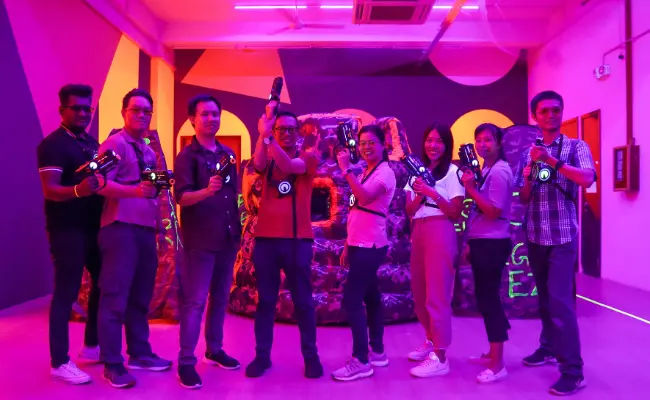
Laser tag remains one of the most consistently chosen formats for corporate groups—not because it’s extreme, but because it’s controlled excitement.
Well-run corporate laser tag sessions aren’t free-for-alls. They’re built around:
- Clear objectives
- Short, focused missions
- Balanced team assignments
- Facilitator-led pacing
This makes laser tag especially effective for:
- Teams with mixed fitness levels
- Groups who haven’t bonded before
- Larger headcounts that need coordination
Because gameplay relies on communication and positioning rather than strength, quieter team members tend to participate more naturally than expected.
Typical group size: 8 pax and above
Indicative pricing: From $25 per pax
2. City-Based Challenges and Amazing Race Formats

Amazing Race–style programmes shift the focus away from competition and toward shared problem-solving.
Instead of one dominant skill, these experiences reward:
- Planning
- Observation
- Delegation
- Adaptability
Teams move together, split responsibilities, and regroup constantly—mirroring real workplace dynamics.
These formats are often selected when:
- Departments want collaboration without physical intensity
- Groups are large and diverse
- The goal is shared experience over winning
Typical group size: From small teams to large-scale deployments
Indicative pricing: From $28 per pax
3. Creative and Hands-On Workshops

Not every organisation wants high energy—and that’s perfectly fine.
Creative workshops provide a different entry point into team bonding by lowering pressure and encouraging conversation through shared creation.
These sessions work best when:
- Teams include different comfort levels
- Participation needs to feel optional rather than forced
- The focus is appreciation, connection, or reset
Because the pace is gentler, facilitators play a key role in keeping engagement balanced without pushing competition.
Typical group size: 5 pax and above
Indicative pricing: From $25 per pax
4. Facilitated Outdoor Games and Competitive Activities
Outdoor formats appeal to teams that enjoy movement, but they only work well when properly moderated.
Without structure, outdoor games can:
- Sideline less athletic participants
- Become overly competitive
- Feel disorganised
Strong facilitation introduces:
- Rotations
- Clear safety protocols
- Rest intervals
- Inclusive scoring systems
When handled correctly, these activities deliver energy without burnout.
Typical group size: 8 pax and above
Indicative pricing: From $25 per pax
5. Casual Giant Games and Flexible Formats
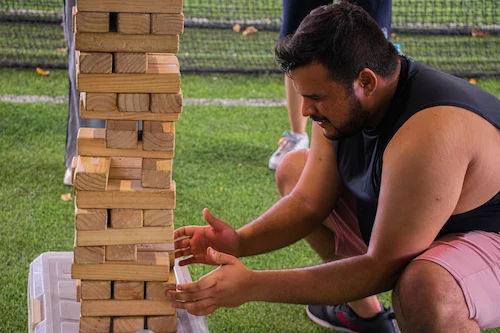
Giant board games often look informal—but that doesn’t mean they’re ineffective.
They’re frequently used when organisers want:
- A relaxed atmosphere
- Easy onboarding
- Flexible flow for mixed-seniority groups
With light facilitation, these formats become social glue rather than background noise.
Typical group size: 8 pax and above
Indicative pricing: From $20 per pax
How to Narrow Down the Right Option for Your Team
Instead of asking “What’s the most fun activity?”, experienced organisers ask more practical questions.
What does success look like?
Is the goal energy, connection, trust, or simply shared time?
How diverse is the group?
Age range, confidence levels, and work relationships matter more than headcount.
What constraints exist?
Budget, venue, timing, and internal expectations all shape what will realistically work.
Activities like structured laser tag and collaborative Amazing Race formats tend to scale well because they’re adaptable without losing clarity.
Why Facilitation and Execution Outweigh the Idea Itself
One of the biggest misconceptions about corporate team building is that the activity does the work.
In reality, execution carries the experience.
Strong execution includes:
- Clear briefings
- Visible facilitators
- Intentional team composition
- Smooth transitions between segments
When these elements are present, teams feel guided—not managed—and engagement rises naturally.
This is why many organisations prioritise providers with operational experience, not just creative concepts.
Working With Team Building Providers in Singapore
Different providers specialise in different outcomes.
Some focus on facilitation-heavy learning programmes.
Others emphasise variety across activity types.
Some specialise deeply in a single format and refine execution to a high standard.
For example:
- Laser tag specialists focus on structured gameplay, safety, and flow
- Multi-activity providers appeal to teams wanting variety within one programme
- Consultative facilitators support learning-driven objectives
The right choice depends on your goals—not just the activity list.
Key Evaluation Considerations Before You Book
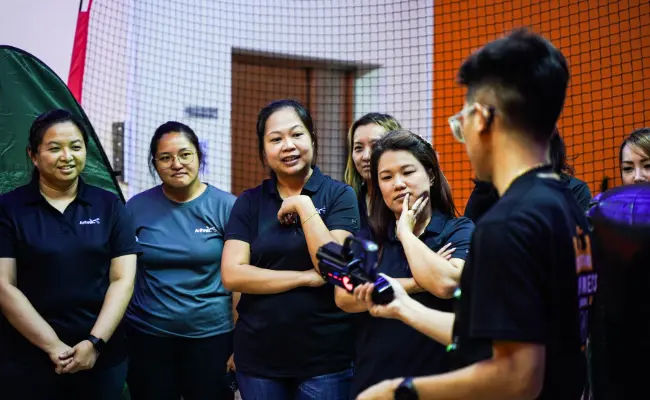
When reviewing team building options, experienced organisers look beyond surface appeal and assess how the experience will actually work with your team on the day. The strongest team building activities are those that function smoothly in the real workplace context, not just in marketing decks.
Key factors organisers typically evaluate include:
- Inclusivity across personalities – how well the activity works with your mix of communication styles, confidence levels, and energy preferences
- Scalability for future sessions – whether the format can be repeated for the same department or expanded for an entire organisation
- Accessibility and safety – how well logistics, physical comfort, and risk management are handled at the venue
- Clarity of setup and flow – whether instructions, transitions, and objectives are easy to follow with the group
- Consistency in facilitation quality – the ability for facilitators to deliver the same standard of experience across different teams and clients
When these elements are handled properly, teams don’t just show up and go through the motions. Instead, they have a shared experience that allows them to create genuine moments of connection and cooperation on a practical level. Strong delivery is what allows teams to create a positive shared experience rather than a forgettable session.
Closing Perspective
Effective corporate team building isn’t about chasing trends or forcing interaction. It’s about designing experiences with your team in mind and choosing formats that work naturally in the way people interact and communicate.
When team building activities are thoughtfully structured, they give teams space to create meaningful interaction without pressure. A well-run team building experience allows participants to engage with the activity in a way that feels comfortable, whether they are part of a highly energetic fun team or a quieter group that values discussion and reflection.
The strongest team building experiences are the ones where facilitation, flow, and expectations are the priority. When this happens, organisations move away from one-off events and toward your own repeatable approach to team bonding—one that supports collaboration and trust long after the session ends.
If you are planning your next team building session for the workplace, prioritise how the experience is delivered with your people in mind, not just what it is called.
FAQs: Corporate Team Building in Singapore
What are some corporate team building ideas Singapore companies commonly use?
Corporate team building ideas Singapore organisations choose usually focus on experiences that strengthen communication, trust, and collaboration. Popular options include structured team building games, creative workshops, and facilitated challenges that work across different personalities. The best team building experiences are those that feel purposeful rather than forced.
What types of team building activities in Singapore are suitable for mixed teams?
Team building activities in Singapore are often designed to work for mixed energy levels, ages, and roles. Activities in Singapore that emphasise teamwork and problem-solving allow both quieter teammates and more vocal participants to contribute. This makes building activities in Singapore more inclusive and effective.
How do corporate team building activities support workplace relationships?
Corporate team building activities help teams interact in a different setting, making it easier to build workplace relationships naturally. When you and your team take part in a shared team bonding experience, communication improves and collaboration becomes more natural back at work.
What makes a team bonding activity effective?
A strong team bonding activity creates space for interaction without pressure. When structured well, your team will feel comfortable participating, whether through friendly competition or cooperative challenges. These team bonding activities work best when facilitation keeps everyone involved.
Are team building experiences in Singapore suitable for large groups?
Yes, many team building experiences in Singapore are designed to scale. Depending on the format, teams can be split into smaller groups, rotated through stations, or managed simultaneously. This allows organisers to run a team building event for small departments or up to large corporate groups.
Can creative workshops be used as a team building experience?
Creative workshops are a popular way to offer a fun and relaxed team building experience. Activities such as perfume making allow participants to slow down, chat, and collaborate in a low-pressure setting. Creating a signature scent together is a unique team bonding experience that encourages teamwork and creativity.
How do team building activities improve teamwork and team performance?
Team building activities help teams practise communication, coordination, and problem-solving in real time. When teammates work together toward a shared goal, it strengthens teamwork and improves team performance. These benefits often carry over into daily work situations.
How do I choose the best team building activities for my team?
To choose the best team building activities, consider what you want your team to get out of the session. Do you want a fun and energetic experience, or something calmer that focuses on connection? Understanding your team building goals helps you select activities that fit your team.
Who usually organises a corporate team building event?
A corporate team building event is usually organised by HR, office managers, or team leads working with external providers. Experienced providers help customise the team building experience based on your objectives, group size, and available time.
Are team building games better than casual activities?
Team building games are effective when you want clear goals and active participation. Casual formats can also work well, especially when the aim is for teams to relax and get to know one another. The best team building Singapore programmes often combine both structured games and lighter moments.
How much time should we set aside for a team building event?
Most team building events run anywhere from one hour up to half a day. You can adjust the duration to suit your schedule and budget. A well-designed team building experience ensures your team stays engaged throughout, without feeling rushed or overwhelmed.